Natural History Week at Bearnstow 2015

Held June 22–26
Download the 2015 Natural History Week Brochure (PDF)
|

Bearnstow Launches Natural History Week 2015, Monday, June 22 With Bob Cook, Wildlife Ecologist, National Park Service, Cape Cod National Seashore “Amphibians and Reptiles of Cape Cod National Seashore” — Download PDF flier 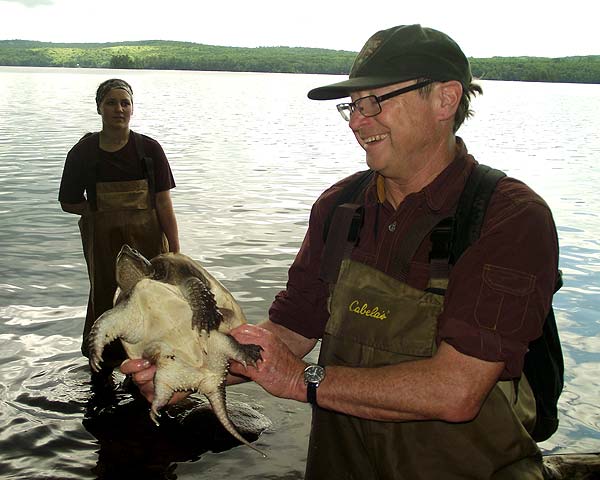 The afternoon hunt for reptiles and amphibians at Bearnstow resulted in five different species of salamanders and two species of frogs from Uncle Daniel’s Brook and a young snapping turtle from Parker Pond. Pictured here, Bob Cook holds up a young snapping turtle he trapped in Parker at the mouth of the brook, assisted by Harper Foote. Photo by Anabel Sagrero 
Tuesday, June 23: Justin Waskiewicz, Lecturer, Rubenstein School of Environment and Natural Resources, University of Vermont “Forests as Dynamic Ecological Systems” — Download PDF flier 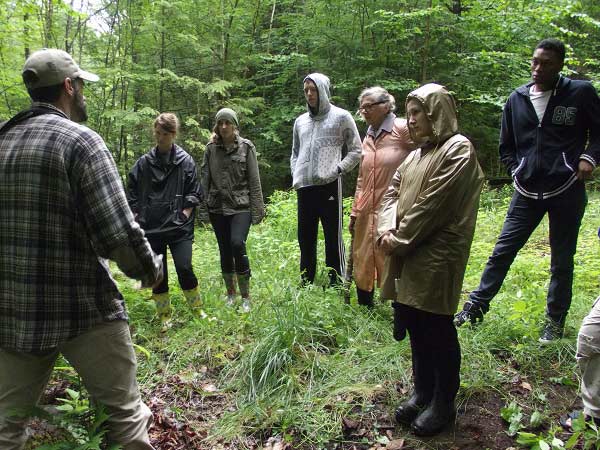 Justin Waskiewicz with group on the woods walk, illustrating the different strategies trees have developed to ensure their success in the forest environment Photo by Anabel Sagrero 
Wednesday, June 24: Julie Brigham-Grette, Dept. Head, Geosciences, University of Massachusetts, Amherst “Understanding New England’s Glacial Landscape” — Download PDF flier 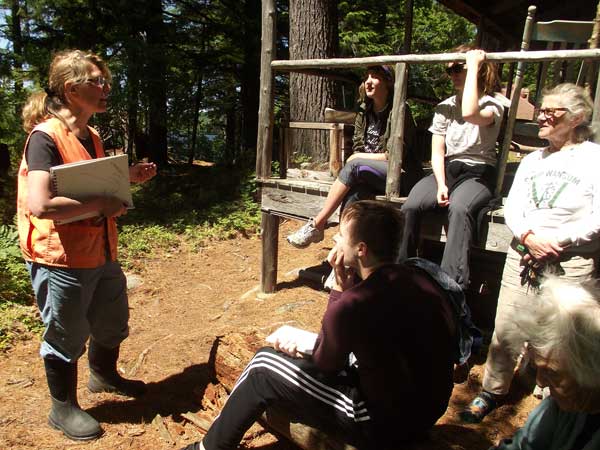 Julie Brigham-Grette with group at the Lodge porch—her discussions covered glacier activity in Norway and Alaska, illustrating the processes that helped form our Maine lakes and landscapes, including Parker Pond. Photo by Anabel Sagrero 
Thursday, June 25: Eric Jones, Assistant Professor of Plant Biology, University of Maine, Machias “Citizen Science: Using Natural History Skills to Support Scientific Research” — Download PDF flier 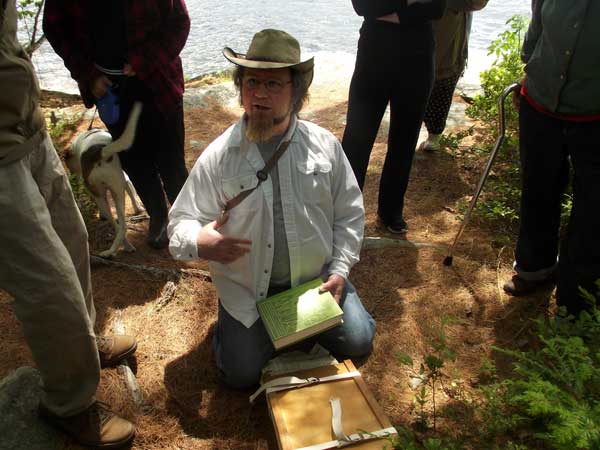 Eric Jones illustrates herbarium techniques—methods for preseving plant species—to the group. Photo by Anabel Sagrero 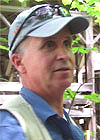
Friday, June 26: Kevin Doran, Natural Science Educator, Maine Forest Service “Maine Woods: Finding the Right Balance” — Download PDF flier 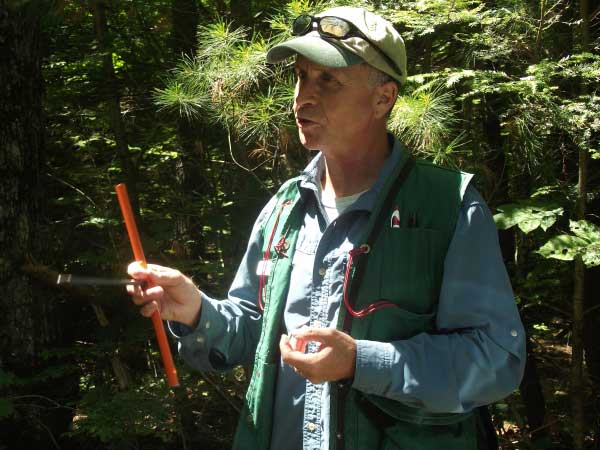 Kevin Doran about to take core sample from the trunk of a hemlock to estimate its age Photo by Anabel Sagrero |
|
We have a registered State of Maine “Big Tree” (an Alleghany service berry), erratic boulders, clay subsoil, ground pines, trailing arbutus, five kinds of native evergreens visible from one vista, reindeer moss, and lichen once used to make lavender dye. Parker Pond’s pure water is phenomenal: over the years it has never failed to test safe to drink.