A Natural History Week at Bearnstow 2017

Held June 20–23, 26 and 30
Lecture Presentations and Nature Walks by Visiting Naturalists
Morning Lectures (10:30 a.m.) / Afternoon Nature Walks (1:30 p.m.)
Download PDF flyer
Held June 20–23, 26 and 30
Lecture Presentations and Nature Walks by Visiting Naturalists
Morning Lectures (10:30 a.m.) / Afternoon Nature Walks (1:30 p.m.)
Download PDF flyer
|

Tuesday, June 20: Eric Jones, Assistant Professor of Plant Biology, University of Maine, Machias “Global Climate Change, Projections and Possibilities” — Download PDF flyer 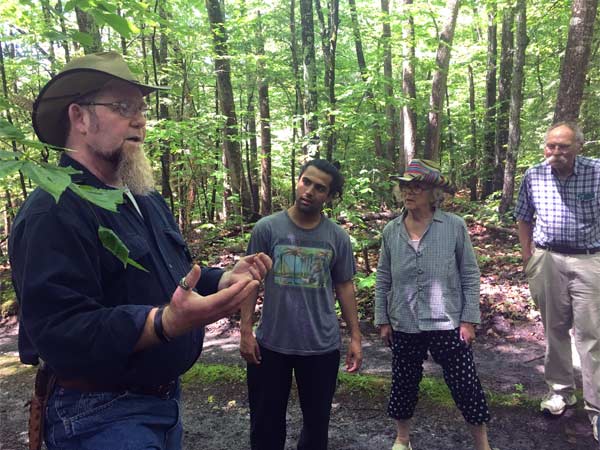 Eric Jones in forest walk with participants Divyamaan Sahoo, Elizabeth Enfield, and Murray Campbell Eric Jones in forest walk with participants Divyamaan Sahoo, Elizabeth Enfield, and Murray CampbellPhoto by Eliza Malecki 
Thursday, June 22: Justin Waskiewicz, Lecturer, Rubenstein School of Environment and Natural Resources, University of Vermont “Forests as Dynamic Ecological Systems” — Download PDF flyer 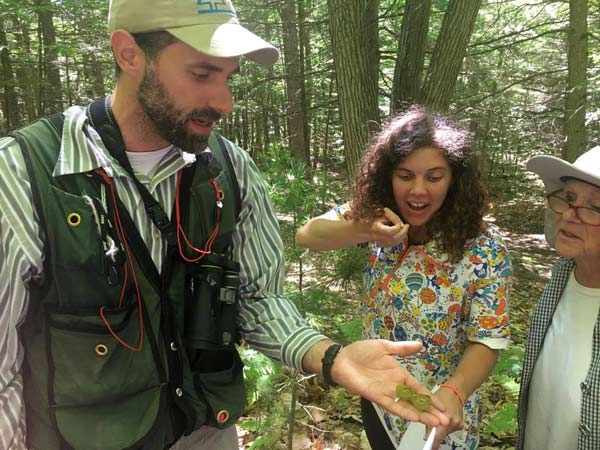 Justin Waskiewicz in forest walk with participants Molly Hess and Elizabeth Enfield Justin Waskiewicz in forest walk with participants Molly Hess and Elizabeth EnfieldPhoto by Eliza Malecki 
Friday, June 23: Kevin Doran, Natural Science Educator, Maine Forest Service “Maine Woods: Finding the Right Balance” — Download PDF flyer 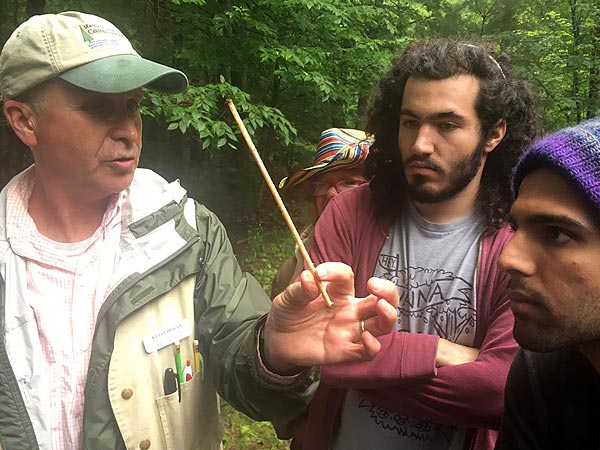 Kevin Doran holding core sample with participants Marc Ferraro and Divyamaan Sahoo Kevin Doran holding core sample with participants Marc Ferraro and Divyamaan SahooPhoto by Eliza Malecki 
Monday, June 26, 10:30 a.m. Alene Onion, Invertebrate Biologist, New York State Department of Environmental Conservation “Parker Pond’s Animals Without Backbones” — Download PDF Flyer 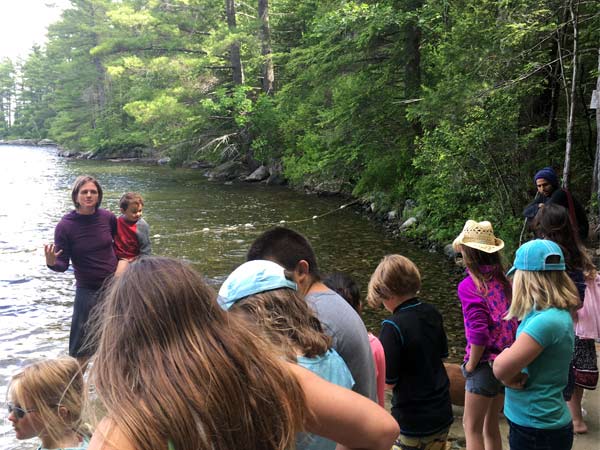 Alene Onion at the beach with children from the Day Camp program preparing to find invertebrate animals in the lake Alene Onion at the beach with children from the Day Camp program preparing to find invertebrate animals in the lakePhoto by Marc Ferraro 
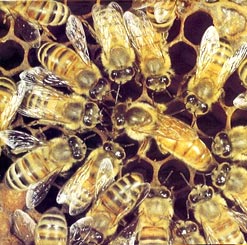
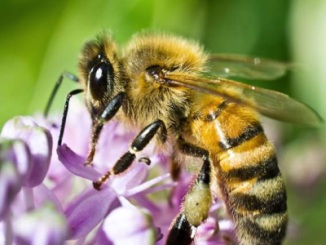
Friday, June 30, 7:30 p.m. Matt Scott, former aquatic biologist for the State of Maine “Climate Change and Habitat Fragmentation of Maine Bees” — Download PDF Flyer
We have a registered State of Maine “Big Tree” (an Alleghany service berry), trailing arbutus, five kinds of native evergreens visible from one vista, reindeer moss, and lichen once used to make lavender dye. Parker Pond’s pure water is phenomenal: over the years it has never failed to test safe for drinking. |
|
|||||||