A Natural History Week at Bearnstow 2018

Held June 18–22, and July 2
Lecture Presentations and Nature Walks by Visiting Naturalists
Morning Lectures (10:30 a.m.) / Afternoon Nature Walks (1:30 p.m.)
Download 2018 PDF Flier
Held June 18–22, and July 2
Lecture Presentations and Nature Walks by Visiting Naturalists
Morning Lectures (10:30 a.m.) / Afternoon Nature Walks (1:30 p.m.)
Download 2018 PDF Flier
|

Monday, June 18: Nicole Rogers, Rubenstein School of the Environment and Natural Resources University of Vermont, Burlington “Maine Forests: Past, Present and Future” — Download PDF Flier 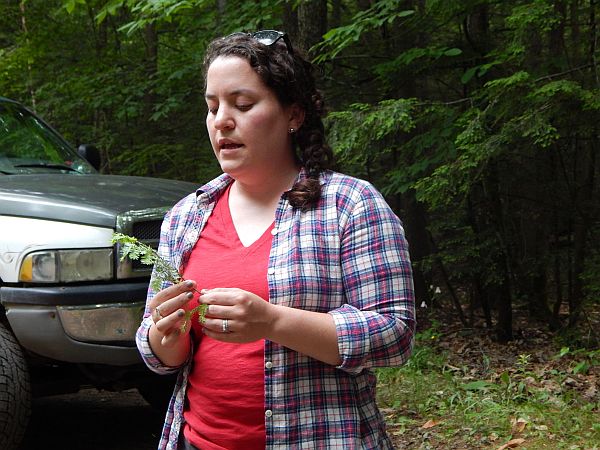 Nicole Rogers identifies unique arrangement of leaves to identify tree species. Nicole Rogers identifies unique arrangement of leaves to identify tree species.Photo by Daniel Ramírez 
Tuesday, June 19: Eric Jones, Assistant Professor of Plant Biology, University of Maine, Machias “Plant Mating Systems and Strategies” — Download PDF Flier 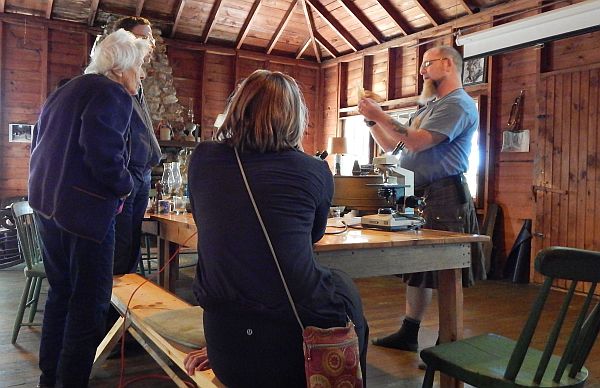 Eric Jones (right) brought an array of wide-field microsopes to examine plant reproductive systems of specimens collected in the forest. Eric Jones (right) brought an array of wide-field microsopes to examine plant reproductive systems of specimens collected in the forest.Photo by Ocoee Chapelle 
Wednesday, June 20: Kalyn Bickerman-Martens, Ecology and Environmental Sciences, University of Maine, Orino “Maine's Native Bumble Bees” — Download PDF Flier 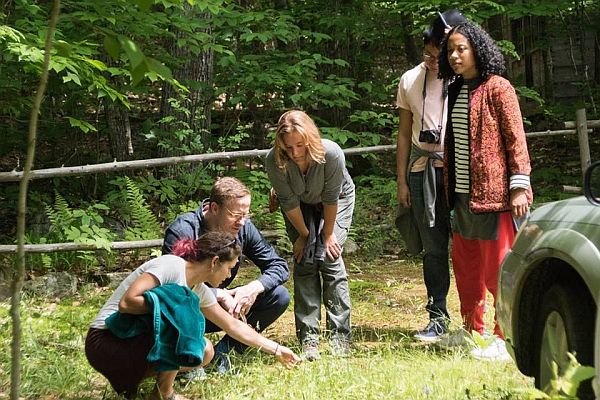 Kalyn (left) and camp participants hunt for bees in the grass alongside the Bearntow parking lot. Kalyn (left) and camp participants hunt for bees in the grass alongside the Bearntow parking lot.Photo by Ocoee Chapelle 
Thursday, June 21: Dan Miller, Northeast Climate Science Center, University of Massachusetts, Amherst “Climate Change in New England: A Long-term Perspective from Lakes”— Download PDF Flier 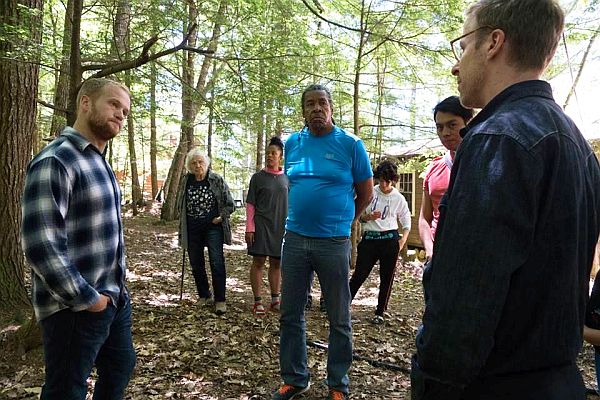 Dan (left) discusses the implications of climate change on the wood walk through Bearnstow’s forest. Dan (left) discusses the implications of climate change on the wood walk through Bearnstow’s forest.Photo by Ocoee Chapelle 
Friday, June 22: Kevin Doran, Natural Science Educator, Maine Forest Service “Maine Woods: Finding the Right Balance” — Download PDF Flier 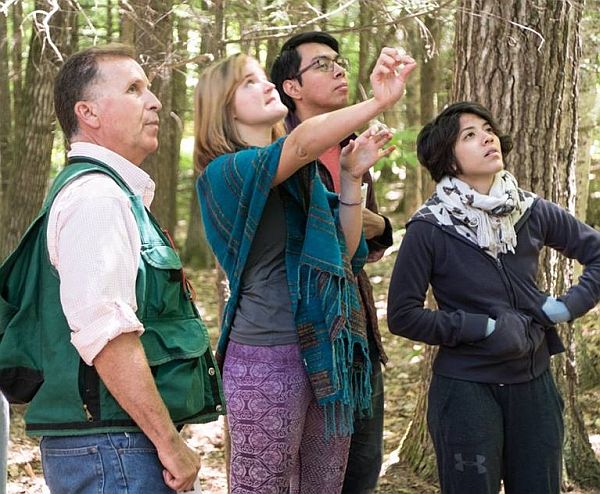 Kevin Doran (left) with three of our Artist Residents helps identify tree species. Kevin Doran (left) with three of our Artist Residents helps identify tree species.Photo by Ocoee Chapelle 
Monday, July 2 Alene Onion, Invertebrate Biologist, New York State Department of Environmental Conservation “Parker Pond’s Animals Without Backbones” — Download PDF Flier 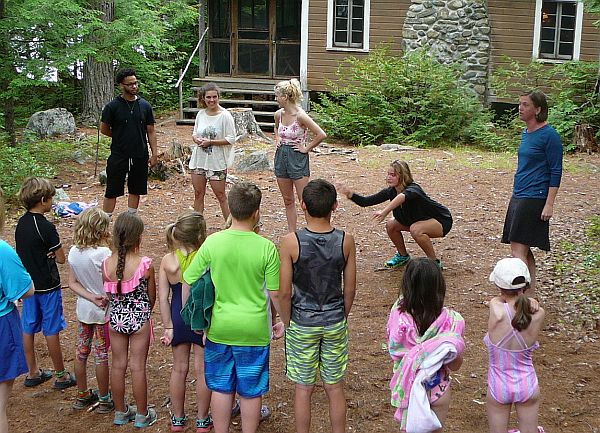 Each year Alene Onion (right) begins her presentation with a game in the clearing for the children. The game demonstrates differences in tolerance of various invertebrate species to polution in the water. Each year Alene Onion (right) begins her presentation with a game in the clearing for the children. The game demonstrates differences in tolerance of various invertebrate species to polution in the water.Photo by Peter Kyle
We have a registered State of Maine “Big Tree” (an Alleghany service berry), trailing arbutus, five kinds of native evergreens visible from one vista, reindeer moss, and lichen once used to make lavender dye. Parker Pond’s pure water is phenomenal: over the years it has never failed to test safe for drinking. |
|